Understanding Benchtop Thickness, Edges, and Finishes
When planning a kitchen or bathroom renovation, many homeowners focus on materials and colours first. However, the details of a benchtop go far beyond surface appearance.
Elements such as thickness, edge profiles and surface finishes all play an important role in how a benchtop looks and performs. These features influence durability, maintenance requirements and how the benchtop integrates with cabinetry and appliances.
Understanding these design choices can help renovators select options that suit both their practical needs and their preferred aesthetic. With a wide range of materials and configurations available, exploring these features early in the planning stage can make the overall renovation process smoother.
Benchtop Thickness Influences Both Appearance and Structural Strength
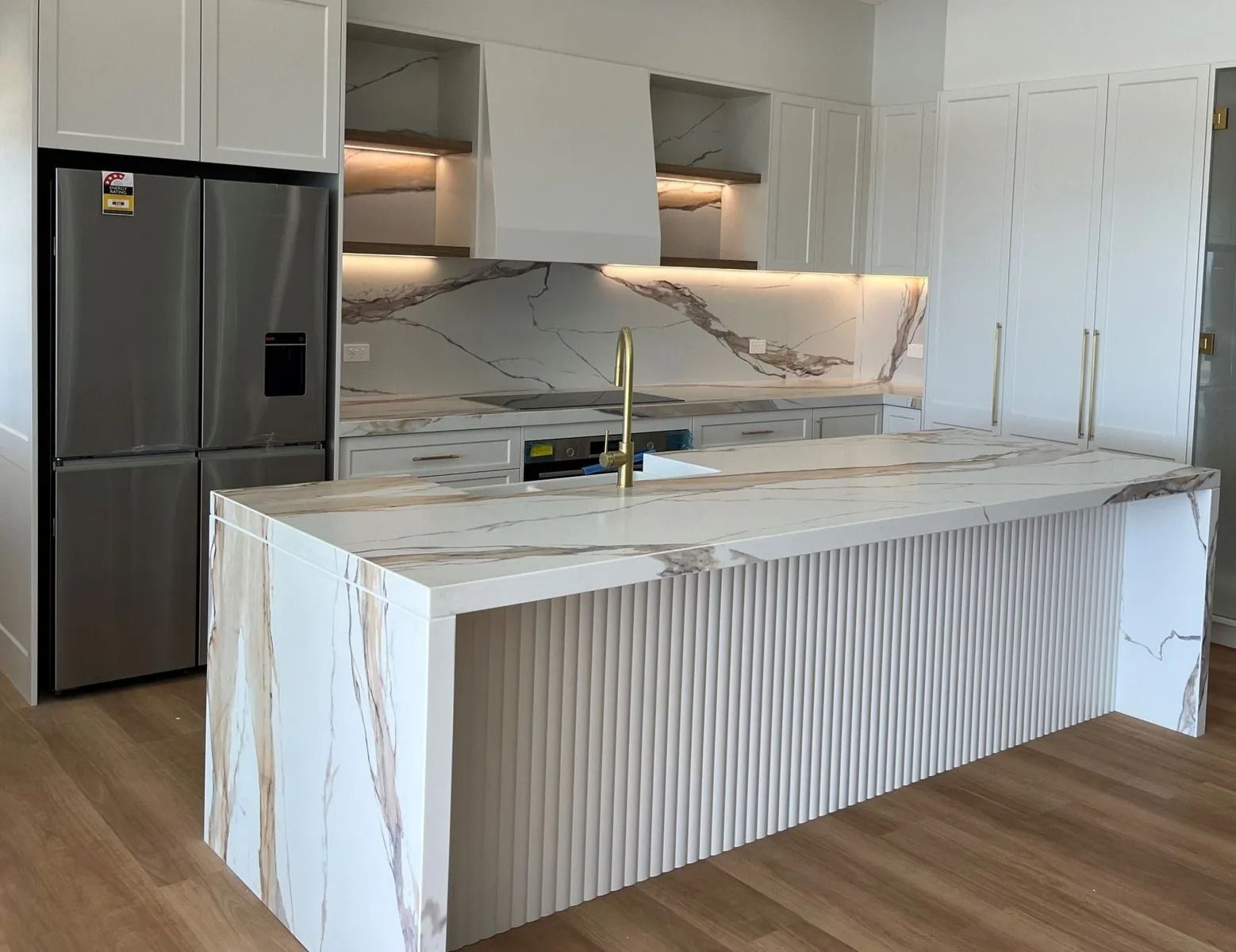
Benchtop thickness is one of the most noticeable design features in any kitchen or bathroom. A thicker benchtop often creates a bold visual statement, while slimmer profiles can contribute to a lighter and more contemporary look.
Beyond appearance, thickness also affects structural stability. Thicker slabs may offer additional support in areas where the benchtop extends over cabinetry or forms part of an island. The choice of thickness can also influence how the benchtop aligns with splashbacks, cabinetry and appliances. For example, a thicker edge may create a more substantial visual frame, while thinner profiles may blend seamlessly with minimalist cabinetry designs.
For renovators exploring benchtop thickness and finishes, understanding these visual and structural factors can help guide their design decisions.
Popular Benchtop Thickness Options and Where They Are Commonly Used
Residential benchtops are typically manufactured in several standard thicknesses. Each option suits different design preferences and practical applications.
Common benchtop thickness options include:
- 20mm slabs, often chosen for contemporary kitchen designs
- 30mm slabs, commonly used for a more substantial appearance
- 40mm profiles, created by layering or edge detailing for a thicker look
- Thin-profile designs, used in minimalist or modern interiors
The selected thickness may depend on the overall style of the kitchen, the type of cabinetry and the chosen benchtop material. When planning kitchen benchtops in Tamworth, renovators often review these thickness options alongside cabinet design and layout considerations.
Edge Profiles Can Completely Change the Look of a Benchtop
While thickness defines the size of a benchtop, edge profiles shape how the front of the surface appears. The edge detail is often one of the first visual elements people notice when entering a kitchen or bathroom.
Edge profiles influence the character of a benchtop. Some styles emphasise sharp lines and modern simplicity, while others soften the appearance with curved or decorative contours.
The choice of edge profile may also affect how the benchtop feels when used regularly. Rounded edges can create a softer tactile experience, while squared edges contribute to a crisp, architectural appearance. Selecting the right edge profile helps tie the benchtop design together with the rest of the interior.
Common Edge Styles Used in Modern Kitchens and Bathrooms
Several edge profiles are widely used in residential benchtop design. Each option creates a slightly different visual effect.
Some common edge styles include:
- Square edge, offering a clean, modern appearance
- Pencil round edge, which softens corners slightly
- Bevelled edge, adding a subtle angled detail
- Bullnose edge, featuring a fully rounded front
Each profile can influence how light interacts with the surface and how the benchtop complements surrounding cabinetry. When selecting custom benchtops in Tamworth, renovators often consider how the edge style aligns with their overall design vision.
Surface Finishes Affect Both the Feel and Maintenance of a Benchtop
Beyond thickness and edges, surface finishes play an important role in the overall performance of a benchtop. The finish determines how the surface reflects light and how it feels to the touch.
Different finishes can create dramatically different visual results even when applied to the same material. Some finishes emphasise shine and reflection, while others create a more subdued, textured appearance.
Maintenance requirements may also vary depending on the finish type. Some surfaces highlight fingerprints or smudges more easily, while others may conceal minor marks more effectively.
When selecting stone benchtops in Tamworth, finish selection is often considered alongside material and colour choices.
Understanding the Differences Between Polished, Matte and Textured Finishes
Several finish types are commonly used in residential benchtops. Each offers distinct visual and practical characteristics.
Common finish options include:
- Polished finishes, which reflect light and emphasise colour depth
- Matte finishes, providing a softer and less reflective surface
- Textured finishes, adding subtle tactile detail and visual interest
These finishes can influence how the benchtop interacts with surrounding lighting and décor. Choosing the right finish often depends on personal preference, lighting conditions and the intended style of the room.
Matching Benchtop Features With Cabinetry and Interior Design
A well-designed benchtop works as part of a broader interior composition. Thickness, edges and finishes should complement cabinetry, flooring and splashbacks rather than compete with them.
For example, thick benchtops with bold edge profiles may suit kitchens featuring statement cabinetry or large island benches. In contrast, thinner profiles often integrate smoothly with streamlined cabinetry and modern interiors.
Colour and finish also play a role in how the benchtop interacts with surrounding surfaces. Matte finishes may soften a space filled with reflective materials, while polished finishes can enhance brighter interiors. Considering these elements together helps create a balanced design.
Working With a Benchtop Supplier Helps Bring Design Ideas Together
Choosing the right benchtop involves several design and technical considerations. A benchtop supplier can assist by guiding homeowners through these decisions.
The process often includes:
- Reviewing material options and finishes
- Recommending suitable thickness profiles
- Explaining available edge styles
- Measuring cabinetry for accurate installation
This collaborative approach allows homeowners to visualise how the final benchtop will integrate into the space. For renovators planning benchtops in Tamworth, working closely with a supplier can simplify the process of selecting materials and finalising design details.
Renovating kitchens and bathrooms across Tamworth often involves balancing design preferences with practical performance. At That's Tops by Design, we assist homeowners exploring benchtops in Tamworth, including custom designs, stone benchtops and tailored installations that suit local homes. To learn more about benchtop options or discuss your renovation plans, visit https://www.thatstops.com.au/ or contact us today.